The Platform Moment: How OpenClaw Just Became Accessible to Everyone
The biggest shift in work automation since the App Store just happened. Here's what changed.
Reading time: 8 minutes | TL;DR: Jump to Key Takeaways
 Credit Link
Credit Link
Two announcements landed this weekend that seemed like typical tech news. But when you understand what gap they closed, you're watching a platform moment unfold in real-time.
Peter Steinberger, creator of OpenClaw—the open-source AI agent that's been quietly revolutionizing how people work—joined OpenAI. The project stays open source and free.
Simultaneously, Kimi (Moonshot AI) launched a cloud-native version of OpenClaw that runs directly in your browser with zero setup required.
To understand why this matters, you need to know what people have been doing with OpenClaw, and why 99% of people couldn't access it until now.
#📊 What People Are Actually Building
OpenClaw isn't theoretical. It's not a demo. People are running real businesses, managing real money, and building real products with it right now.
According to community showcases and use case repositories, 160,000 developers are currently building with OpenClaw, with over 1,700 automation skills available in the ecosystem.
💰 Real Examples From The Trenches
"Someone gave their OpenClaw agent $1,000 and told it to start a business. The agent is running autonomously, making decisions about resource allocation and business strategy."
🏥 Running Entire Companies
A physical therapy company owner is running their entire operation through OpenClaw:
- ✅ Four Slack workspaces
- ✅ Four separate calendars
- ✅ Four email accounts
- ✅ One AI agent managing everything
Scheduling, client communication, operations coordination—all handled autonomously.
📧 Email Mastery
One user's agent processed 4,000 emails in two days while they slept.
It unsubscribed from spam, categorized messages by urgency, and drafted replies. The owner woke up to an organized inbox and pre-written responses ready for review.
#🤖 Multi-Agent Teams
 Multi-Agent Team Structure
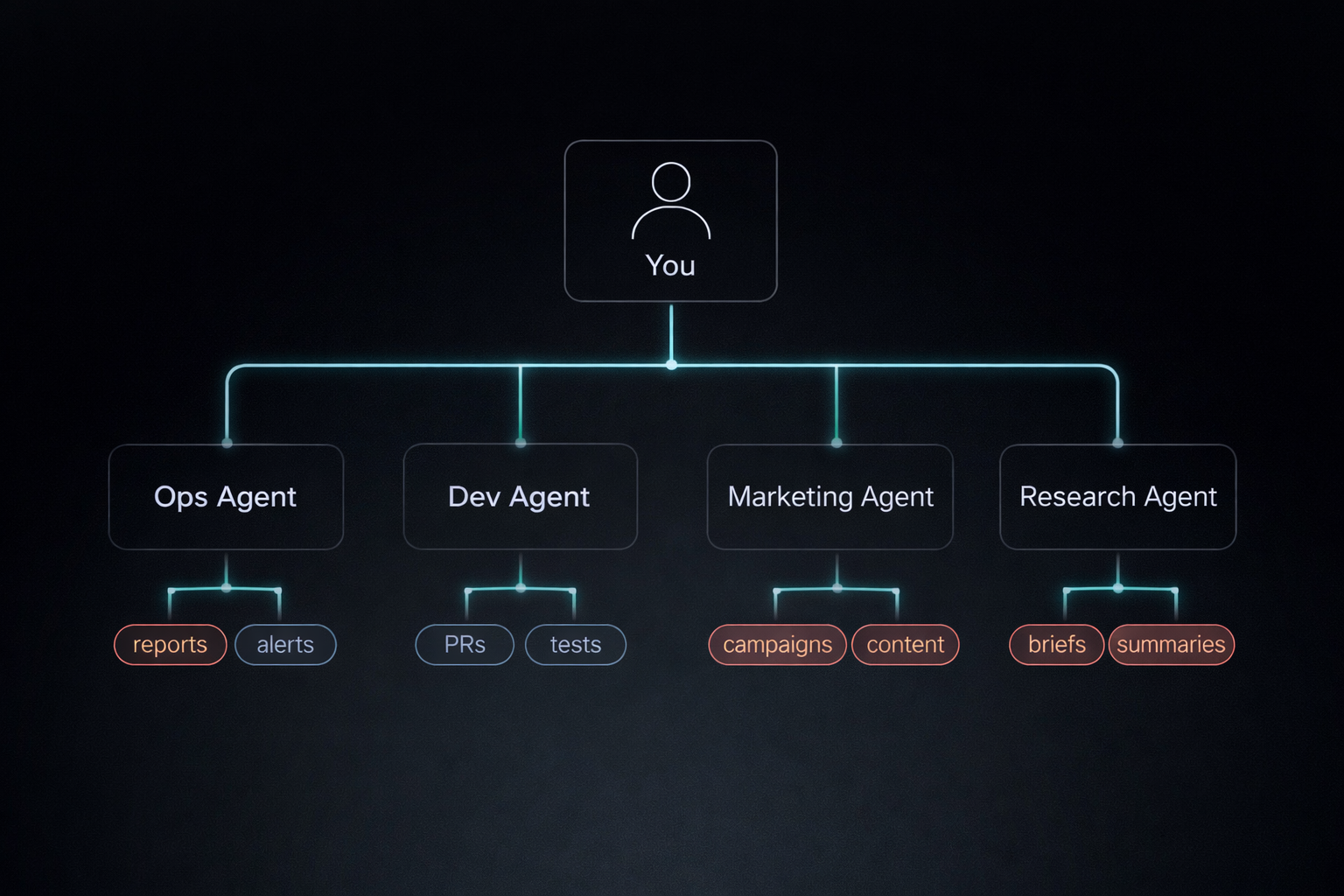
A solo founder built a 4-agent team that works 24/7:
| Agent | Role | Responsibilities | | --- | --- | --- | | 🧠 Strategy Agent | Big Picture | Planning, coordination, decision-making | | 💻 Dev Agent | Technical | Coding, architecture, debugging | | 📱 Marketing Agent | Growth | Research, content, competitor analysis | | 📊 Business Agent | Operations | Metrics, pricing, strategy |
#⚡ End-to-End Automation
Developers are building systems where the entire workflow is automated:
Client voice message →
Agent writes code →
Pushes to test branch →
Sends preview link →
Auto-deploys on approval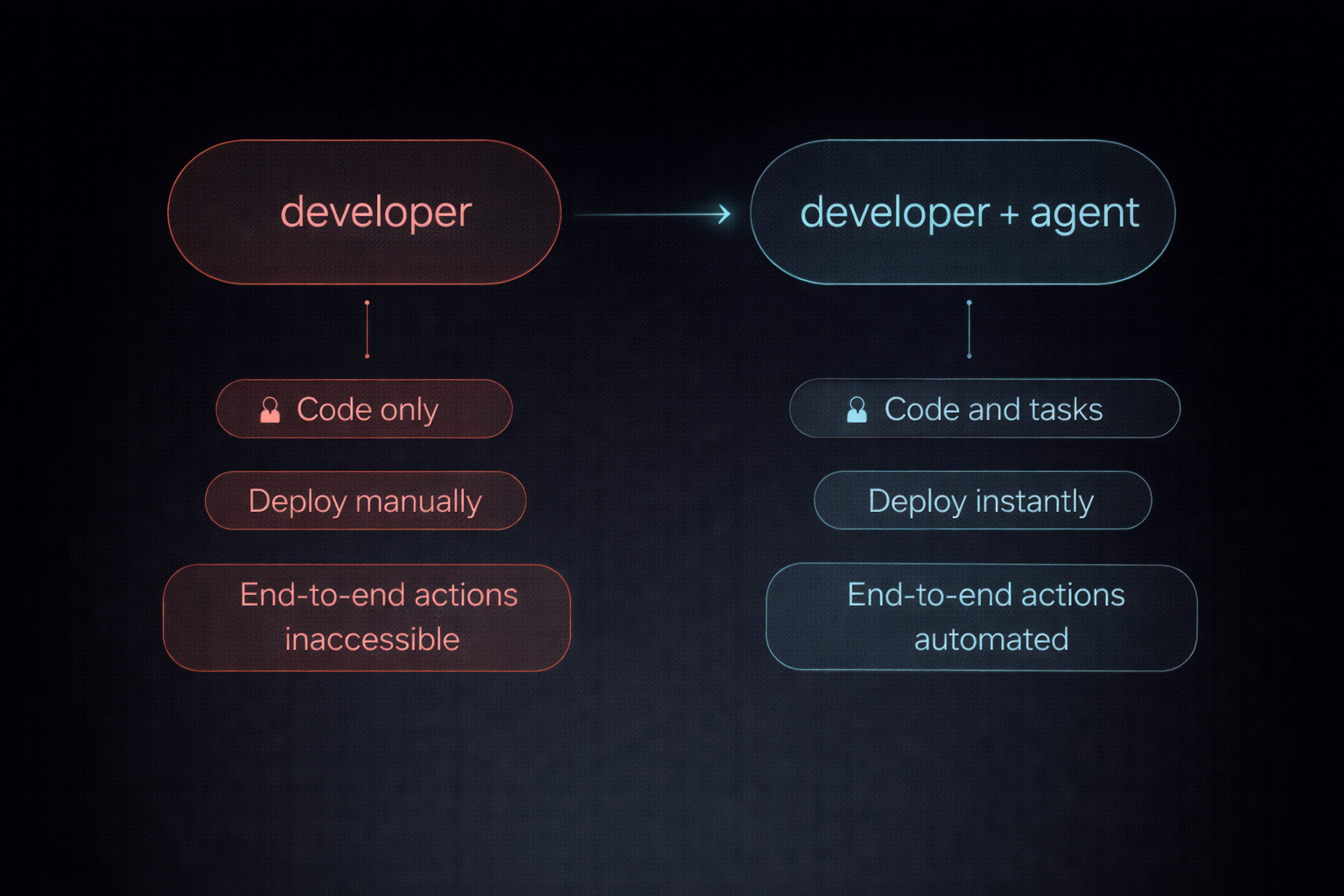 Developer to Agent Workflow
🌙 The Overnight Work Pattern
The most common pattern across power users? Overnight work.
People assign tasks before bed and wake up to completed results. The agent doesn't clock out. It doesn't take breaks. It works while you sleep.
Pro Tip:The most successful OpenClaw users treat it like hiring a night shift team. Brief them before you sleep, review results in the morning.
#🚧 The Gap That Kept Everyone Out
Here's the problem: All of this capability existed, but it was locked behind a technical barrier that kept out designers, solo builders, non-technical founders, and anyone who didn't want to become a part-time DevOps engineer.
What You Needed Before This Weekend
To run OpenClaw before Kimi's launch, you needed:
❌ Infrastructure: A VPS or dedicated server running 24/7
- Choose a provider (AWS, DigitalOcean, Hetzner)
- Configure the server
- Manage uptime
- Pay monthly hosting costs
❌ Technical Skills: Command line proficiency
- Environment variables
- API configurations
- System dependencies
- Debug when things break (and they will)
❌ Security Management: You own all security
- API keys
- Credentials
- Access controls
- One misconfiguration = exposed data
❌ Maintenance Burden: Updates, patches, troubleshooting
- No support team
- No "contact us" button
- You're on your own
This barrier wasn't just inconvenient—it was absolute.Either you had these skills, or you didn't get access. No middle ground.
The capability existed. The access didn't.
#What Kimi Just Changed
 Kimi Platform
Kimi's cloud-native implementation removed every single one of these barriers.
The New Reality
✅ No server required ✅ No terminal commands ✅ No configuration files ✅ No security concerns to manage
You open a browser. You log in. You start building.
What You Get With Kimi Claw
According to the launch announcement:
| Feature | Description | | --- | --- | | 🛠️ 5,000+ Skills | Community-contributed automation skills ready to use immediately | | 💾 40GB Storage | Dedicated cloud storage for your projects and data | | ⏰ 24/7 Persistent | Agent environment runs continuously, even when browser is closed | | 🧠 Built on Kimi K2.5 | Long-term memory and context retention | | 🎯 Beta Access | Currently available to Allegretto-tier members and above |
The platform handles infrastructure. They manage security. They ensure uptime. You just build.
#📱 Why This Is The "iPhone Moment"
Remember when mobile apps existed before the iPhone App Store?
Developers could build them. Technically savvy users could install them through complex processes. But normal people? Locked out.
Then the App Store launched in 2008. Suddenly anyone could tap "Install" and have an app in seconds.
The Parallel Is Exact
| Before App Store | After App Store | | --- | --- | | Apps existed but required technical setup | One-tap install for anyone | | Only developers and tech users | Everyone with an iPhone | | Friction blocked mainstream adoption | Friction removed, ecosystem exploded |
| Before Kimi Claw | After Kimi Claw | | --- | --- | | AI agents existed but required server setup | Browser-based access for anyone | | Only developers and technical users | Everyone with internet | | Friction blocked mainstream adoption | Friction removed, ecosystem opening |
The capability existed before. The friction disappeared after.
The Core Insight: The technology didn't fundamentally change. The access did. And when access opens up, ecosystems explode.
#🚀 What Opens Up Now
With the friction removed, we're going to see three immediate shifts:
1️⃣ Solo Operators Will Compete With Funded Teams
Before:
- Solo designer drowning in client work
- Can't afford to hire an assistant
- Capacity limited to 2-3 clients max
After:
- 24/7 agent processing client work overnight
- Automated reporting, asset generation, handoffs
- Can handle 5+ clients with same time investment
The competitive gap between solo and team isn't about headcount anymore. It's about who leverages AI agents effectively.
2️⃣ The "I Don't Have Time" Excuse Disappears
That side project you've been putting off? Your agent can work on it while you sleep.
That business idea that would take months to validate? Your agent can run research, build landing pages, and test hypotheses continuously.
Time was the constraint. Now execution happens in parallel to your day job.
3️⃣ A New Class of Builders Emerges
We're going to see people who aren't "technical" in the traditional sense building sophisticated automations:
- 🎨 Designers
- 📱 Marketers
- ⚙️ Operations people
- ✍️ Writers
They don't need to learn to code. They need to learn to orchestrate agents.
That's a fundamentally different skill—and one that's more accessible.
CTA: Learn agent orchestration basics →
#⏰ The Gap That's Forming Right Now
January 2026: Only technical people could run OpenClaw
February 2026: Anyone can
March 2026: The people who didn't start will be asking "how is everyone shipping so fast?"
This isn't hyperbole about the future. This is observation about the present.
Real People Are Already:
✅ Running companies through AI agents ✅ Processing thousands of tasks overnight ✅ Building multi-agent teams that work 24/7 ✅ Competing with funded startups as solo operators
The Platform Is Live. The Friction Is Gone. The Doors Are Open.
The question isn't "will this be important?"
The question is "how long until everyone else catches up to the people who started in February?"
#🔮 What Happens Next
 Future of OpenClaw
@steipete's move to OpenAI while keeping OpenClaw open source signals something important:
Major companies see the value in supporting open ecosystems rather than locking them down.
The New Model
OpenAI gets:
- Access to Steinberger's expertise
- Ability to build "the next generation of personal agents"
- Connection to thriving open source community
The community gets:
- Continued development
- Corporate resources and stability
- Foundation structure for longevity
The Business Model Shift
Kimi's cloud deployment shows that the business model isn't selling the tool—it's providing the infrastructure and platform services around it.
This is the:
- 🐧 Linux moment
- 📝 WordPress moment
- 📱 iPhone App Store moment
The tool is free. The platform provides value. The ecosystem grows.
#🎯 Key Takeaways
For Designers & Builders
- The barrier to AI automation just dropped to zero - No coding, no servers, no setup
- Real people are running businesses on this - Not theory, not future, happening now
- Solo operators can now compete with teams - 24/7 agents level the playing field
- Early adoption compounds - The gap between users and non-users is widening weekly
What To Do Next
- [ ] Explore Kimi Claw - Try the beta →
- [ ] Browse the skill library - See what 1,700+ automations are available
- [ ] Join the community - OpenClaw Showcase | GitHub Use Cases
- [ ] Start small - Pick one repetitive task to automate this week
- [ ] Share your wins - The community loves seeing what people build
Big CTA Button: Get Started With Kimi Claw →
#💬 Join The Conversation
The people who start building today aren't early adopters. They're the foundation of what comes next.
Where are you in your automation journey?
- 🟢 Already running agents 24/7
- 🟡 Exploring but not started yet
- 🔴 First time hearing about this
Drop a comment and let's discuss what you're building.
[@mention relevant people to tag]:
Share this article:
#📚 Complete Source List
Primary Sources
- Bloomberg (February 15, 2026) - "OpenAI Hires OpenClaw AI Agent Developer Peter Steinberg"
- TechCrunch (February 15, 2026) - "OpenClaw creator Peter Steinberger joins OpenAI"
- MarkTechPost (February 15, 2026) - "Moonshot AI Launches Kimi Claw: Native OpenClaw on Kimi.com with 5,000 Community Skills and 40GB Cloud Storage"
Use Case Collections
- Forward Future (2026) - "What People Are Actually Doing With OpenClaw: 25+ Use Cases"
- Medium - Alex Rozdolskyi (February 2026) - "10 Wild Things People Actually Built with OpenClaw"
- Tech Startups (February 12, 2026) - "OpenClaw Is Going Viral: The #1 Use Case and 35 Ways People Automate Work and Life"
- Graham Mann (2026) - "Every OpenClaw Use Case I Could Find (85+)"
Community Resources
- GitHub - hesamsheikh - "awesome-openclaw-usecases: A community collection"
- UC Strategies (2026) - "20 Genius OpenClaw Use Cases People Are Using Right Now"
- Latenode Blog (2026) - "Popular OpenClaw Use Cases: What People Actually Do With It"
Documentation & Guides
- OpenClaw Wiki (2026) - "OpenClaw Explained: Usage, Use Cases, and Evolution"
- Hostinger Tutorials (2026) - "OpenClaw use cases: 25 ways to automate work and life"
#👤 About The Author
Syed
DISCLAIMER: This is AI curated article. I tried my best to credit all sources used to curate this
Last Updated: February 16, 2026
Reading Time: 8 minutes
Tags: #OpenClaw #AIAgents #Automation #Productivity #NoCode #IndieBuilders #SoloFounders #DesignAutomation
Ready to start building?
The platform moment is happening. The question is whether you're building on it.